

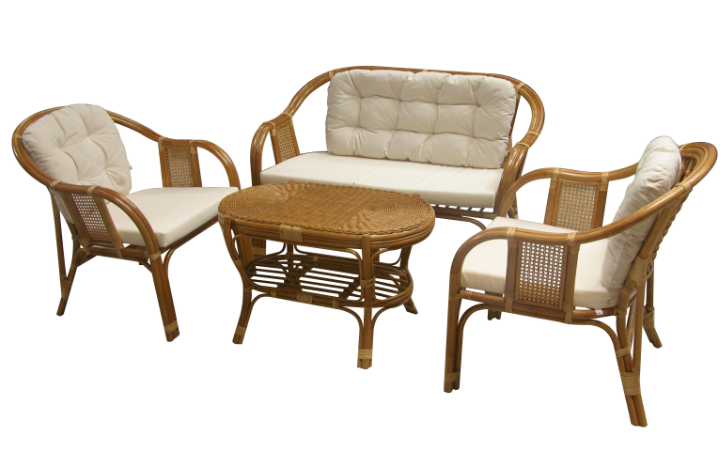
Rattan furniture, admired for its natural beauty and durability, embodies a rich tradition of craftsmanship that begins deep in the jungles where rattan palms thrive. This article delves into the intricate process behind the creation of rattan furniture, from the harvesting of raw materials to the meticulous craftsmanship that transforms rattan into exquisite pieces for homes and gardens worldwide.
Harvesting Rattan: Sustainable Sourcing
The journey of rattan furniture begins in the lush jungles of tropical regions, where rattan palms grow abundantly. Rattan is a climbing vine that belongs to the palm family, known for its long, flexible stems that can reach up to hundreds of meters in length. Harvesting rattan is a delicate process that requires expertise and care to ensure sustainability and minimal impact on the environment.
Harvesting typically involves skilled workers who navigate dense forests to locate mature rattan palms. Unlike hardwoods, which require years to mature, rattan grows rapidly and can be harvested within a few years of planting. This rapid growth rate makes rattan a renewable resource, supporting sustainable practices in the furniture industry.
Once identified, rattan stems are carefully cut from the palms using machetes or knives. The stems are then trimmed to remove thorns and excess foliage, leaving behind clean, flexible poles ready for processing. Sustainable harvesting practices ensure that rattan palms continue to thrive in their natural habitat, preserving biodiversity and supporting local communities who depend on rattan harvesting for their livelihoods.
Processing Rattan: From Raw Material to Workable Material
After harvesting, rattan stems undergo several processing stages to prepare them for weaving and crafting. The first step is stripping the outer skin of the rattan stems, revealing the smooth inner core. This core is what provides the strength and flexibility needed for weaving.
Once stripped, rattan stems are sorted based on size, quality, and color. This sorting process ensures consistency in the final product and allows craftsmen to select the appropriate materials for specific furniture designs. The sorted rattan stems are then soaked in water or boiled to make them more pliable and easier to work with during the weaving process.
Weaving and Crafting: Artistry and Skill
Weaving is perhaps the most critical and intricate phase in the creation of rattan furniture. Skilled artisans, often trained from a young age in traditional weaving techniques, meticulously weave rattan stems into intricate patterns and designs. These patterns can range from simple, classic weaves to more elaborate and decorative styles, depending on the intended furniture piece.
Traditional weaving methods vary depending on the cultural heritage and regional practices of the artisans. In Southeast Asia, for example, craftsmen use techniques such as wicker weaving, which involves weaving thin rattan strips over a frame to create lightweight and durable furniture pieces. Other techniques include cane binding, where rattan strips are tightly bound around a frame to create solid and sturdy furniture structures.
The weaving process requires precision, patience, and attention to detail. Each rattan strand is carefully placed and secured, ensuring that the final piece is not only aesthetically pleasing but also strong and resilient. Artisans may spend hours or even days weaving a single piece of furniture, depending on its complexity and size.
Assembly and Finishing Touches
Once the weaving is complete, rattan furniture pieces are assembled and finished with additional components such as metal or wooden frames, cushions, and decorative elements. Assembly involves securing woven rattan panels to frames using nails, screws, or traditional bindings, ensuring structural integrity and durability.
Finishing touches may include sanding, staining, or applying protective coatings to enhance the appearance and longevity of the furniture. These processes require skilled craftsmanship to achieve a smooth finish and uniform appearance across the entire piece.
Quality Control: Ensuring Excellence
Quality control is a crucial aspect of the manufacturing process at our company. We employ rigorous quality control measures at every stage, from harvesting to final assembly, to ensure that each rattan furniture piece meets our high standards of craftsmanship and durability.
Our quality control team, including two Filipino technicians dedicated to this task, conducts thorough inspections and tests to identify any defects or inconsistencies. They inspect the raw rattan materials for strength and flexibility before processing, monitor the weaving process to ensure uniformity and precision, and conduct final inspections to verify structural integrity and finish quality.
Sustainability and Environmental Responsibility
As advocates of sustainable practices, we prioritize responsible sourcing and manufacturing processes throughout our operations. By using renewable rattan resources and adhering to sustainable harvesting practices, we minimize our environmental footprint and support the long-term health of tropical forests.
Sustainability also extends to our commitment to ethical labor practices and community engagement. We work closely with local communities and rattan harvesting cooperatives to promote fair wages, safe working conditions, and opportunities for skills development.
The Artistry and Heritage of Rattan Furniture
The creation of rattan furniture is not just a manufacturing process; it is an art form that reflects centuries of cultural heritage and craftsmanship. Each piece of rattan furniture embodies the skill and dedication of the artisans who transform raw materials into functional works of art.
Our company’s journey in the rattan furniture industry is a testament to this rich tradition. From our humble beginnings as an exporter of rattan materials in the early 1930s to becoming a leading manufacturer of high-quality rattan furniture today, we have remained committed to preserving the artistry and heritage of rattan craftsmanship.
Conclusion
Behind every piece of rattan furniture lies a fascinating journey from the jungles where rattan palms grow to the living rooms and gardens where they bring comfort and beauty. The process of harvesting, processing, weaving, and crafting rattan furniture showcases the ingenuity, skill, and commitment of artisans dedicated to creating timeless pieces that enrich homes around the world.
As we continue to innovate and adapt to changing market trends, our commitment to quality, sustainability, and preserving the artistry of rattan furniture guides every aspect of our business. Innovation in rattan furniture goes beyond aesthetic appeal; it encompasses advancements in sustainable materials, production techniques, and design innovation. We invest in research and development to explore new ways of utilizing rattan and integrating it with modern materials to enhance durability and versatility.